
In the second post of our Birth Trauma takeover, Manna Mostaghim speaks with retired midwife Naghmeh Teymourian-Yates, who details her experiences of working in NHS maternity care.
Eight of the recommendations in the Birth Trauma Inquiry Report (published in 2024) contend with the need for greater funding and support for maternity care services across the National Health Service in England (NHS England). However, the Report notes that it received “1,311 personal submissions from parents and 92 from professional bodies, charities, campaign organisations and individuals working in maternity, such as midwives and obstetricians” (Thomas, 2024). A gap in the Report’s understanding of maternity care services is the on-the-ground experience of staff actively engaged with labour wards on a day-to-day basis.
This article presents narrative insights from my interview with Naghmeh, a retired midwife with previous experience working with NHS maternity care. This piece was based on a singular conversation that I had with Naghmeh and will not speak to the full experience of staff working in maternity care settings. Yet, I suggest that it provides crucial insights into the complexity and realities of maternity care staff working within NHS England.
Calling the Midwife: An interview with Naghmeh Teymourian-Yates
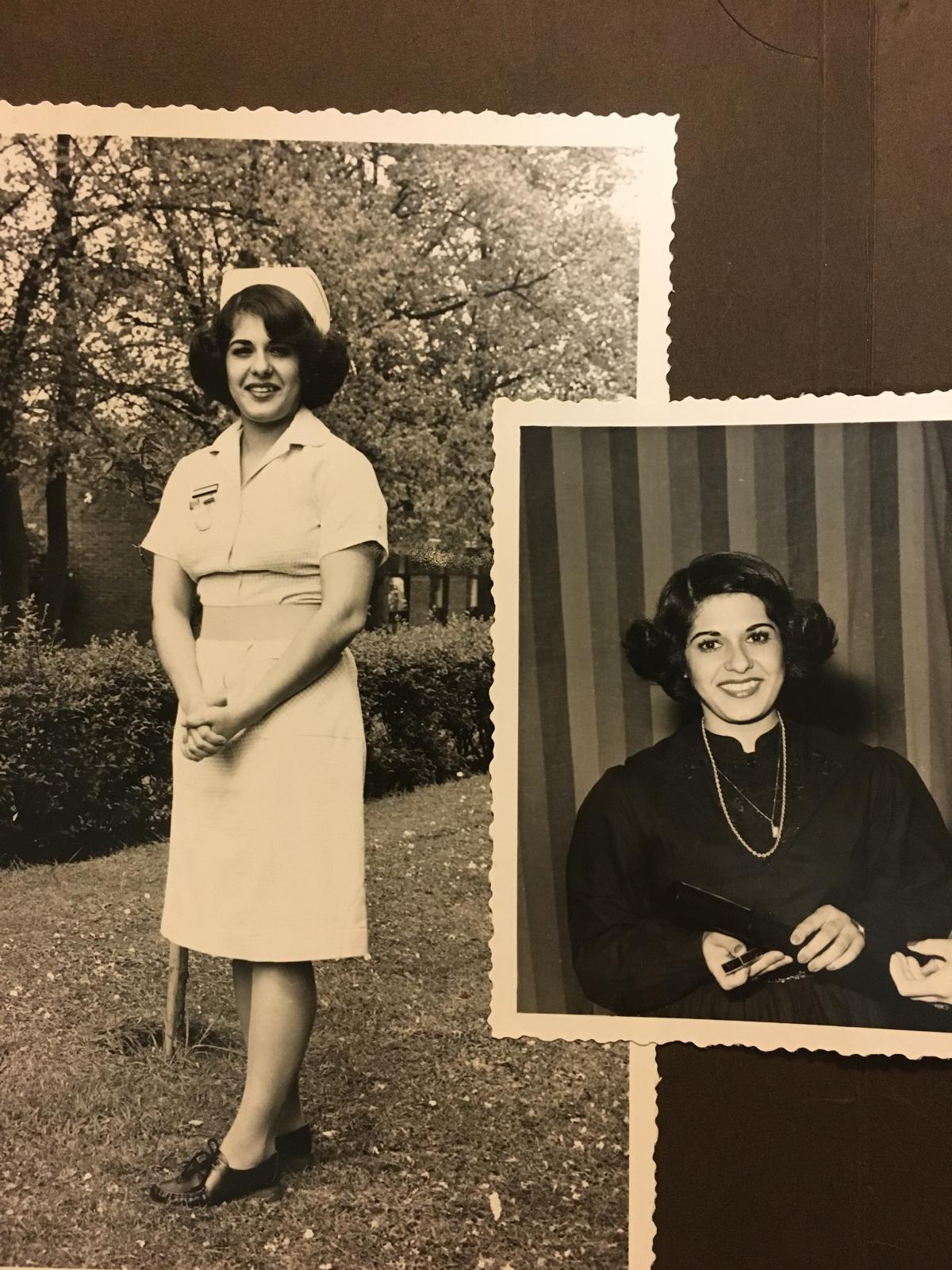
On 20 July 1980, Naghmeh Teymourian-Yates was told that there were plans for a new hospital. It was her first day as a student nurse and midwifery trainee. The new hospital that was promised would have state of the art features. It would ease the workload of NHS staff, and it would improve the maternity care experience of patients. By 1987, no new hospital had materialised. Naghmeh recalls being presented architectural models and carpet samples for the new hospital. She was told the new hospital was delayed but it was coming soon – “with democratically chosen carpets!”
Over the years, whispers would emerge of a new hospital: delayed, delayed, delayed. Money and budgets diverted from a new hospital to build more urgent services elsewhere. She often wondered where the elsewhere was when she had to leave the labour ward to navigate broken buzzers and locked doors just to get to a bathroom on a different floor. Often the labour ward was too busy for her to do that walk. She would have to wait until her twelve-hour shift was finished before she contemplated going to the bathroom. Maybe the new hospital would have a bathroom on the same level as the labour ward. Buzz, buzz, buzz: a patient needs you.
Naghmeh once popped her head into the staff room to ask for an extra pair of hands. The stench of collective exhaustion permeated the atmosphere. She knew that the obstetrics and gynaecology clinician had changed outfits in his car and had a nap on the toilet in between his shifts. He worked at a different hospital and then would come to their hospital as substitute staff. Naghmeh thought he was a bit rough with patients and she would tell management not to bring him back, but they were desperate for staff. Buzz, buzz, buzz: a patient in Room 3 needs you.
Naghmeh’s patients have confided in her that their partners are desperate to know when they can start to have sex again. She has to explain to them that it will compromise their health, their pelvic integrity, and their hygiene. Wait at least six weeks. You cannot always know who instigates sex. But Naghmeh notes that when she is suturing episiotomies – the surgical incision made in the the tissue between the vaginal opening and anus, to widen the vaginal opening during childbirth – it is often a male partner pestering her to know when they can have sex again. Buzz, buzz, buzz: a patient in Room 2 needs you.
Sitting in between a patient’s legs, Naghmeh urges a woman to push. The woman in labour resists the pain. She can’t push; she is too exhausted. She is terrified. The baby’s heartbeat is going down. She is mid-push, but the husband has grown impatient and slaps his wife across the face. With one hand in between the patient’s legs, Naghmeh uses her other hand to gesture to the other staff in the room to stop this man from hitting his wife. She helps the patient finish their labour, hands the woman her child and then calls the police. Buzz, buzz, buzz: the patient in Room 4 needs you again.
She remembered at the beginning of her career, she would know her patients, she would have been able to pick up cues earlier. The colleague who delivered Naghmeh’s children remembered cycling to the houses of postpartum women. They advised them on how to look after the newborn, sometimes while making soup for the family. There is no time for that anymore, not enough money in the budget.
Naghmeh thinks that maybe she could refer certain patients to the specialist midwife who deals with vulnerable patients that have difficult relationships with institutional care. Naghmeh knows that the specialist midwife is particularly adept at caring for patients who need more support: habitual drug users, people that have had previous children taken into care, and people who experience mental health issues. But cuts and funding diversions made during, and in response to, the Covid-19 pandemic, made her role obsolete. Buzz, buzz, buzz: one of the student midwives needs you.
A growing management class of midwives and NHS administrative staff are being funded to make maternity care more efficient. Sometimes staffing shortages occur and midwives that have moved to management are brought back to the frontlines. But they casually and firmly declare their shortcomings in offering clinical assistance (“I have always been bad at cannulas”, “It looks like a complicated birth, maybe it is better that someone with more recent experience handles that”) until Naghmeh finds a role for them shuffling papers on the ward. Buzz, buzz, buzz: a patient in Room 3 needs you.
People with money begin to go to different hospitals to give birth. Her hospital has “posh areas” but sometimes the “affluent patients” will go to wealthier, neighbouring places to have their babies. It is easier for them there, they are better staffed at those hospitals, better services, better equipment. A newer hospital. Other patients living within the boundaries of her hospital are left behind with services that are faltering. Babies of richer parents, one rung higher on the ladder of comfort and care at one day old.
Once upon a time, the hospital she worked at had contained a largely monocultural population but that is not the case anymore. Naghmeh has to learn new things, she has to navigate new things. What does Female Genital Mutiliation (FGM) look like? Do you know that there are different types of FGM? How do you ask for consent when the patient does not speak English? The translator is not going to be there for a few hours, but the baby is in a rush to come out, so she turns to the husband to translate, or to use Google translate. You cannot verify that anything has been translated properly but you see the woman meekly nod, exhausted by the pain.
The one day a year that midwives receive more education about new developments in midwifery cannot cover all of this. Instead, Naghmeh learns the hard way that black women have fibroids at higher rates than any other ethnic group, and that this may impact the delivery of the baby. It’s not going well. They need to move the patient. A couch has been badly wedged between the wall and the doorway. They try to rush the patient to the surgical theatre. She keeps on bleeding and bleeding, waiting for the porters to come. Both the mother and the baby die. Buzz, buzz, buzz: a patient in Room 1 needs you.
Naghmeh was going to retire. Both her children had grown into adults with good careers. She wanted to travel with her husband, and then the pandemic happened. Masks and gloves were locked away. Former patients and members of the community would turn up in car parks and hand over masks and gloves they had sourced for midwives. Midwives had delivered their babies, and they wanted to make sure the midwives could return to their own babies. Naghmeh’s friend and colleague was the first midwife to contract COVID-19 and die.
“I still look at my hands and marvel at what they have done. I could still do it. I have the brain for it. I have the experience for it, but I could not do it anymore”, she taps at her heart.
Naghmeh had retired by 2022. She worked in the same hospital for her whole career. She often hosts afternoon teas with her former colleagues; they swap stories from the past. “You should come sometime. We could tell you stories”. Some of Naghmeh’s friends still work at the hospital. A former colleague told her that management said they are going to get the new hospital in 2030.
About the authors
Manna Mostaghim is a researcher on the provision and politics of sexual and reproductive health in the UK and a PhD Candidate at LSE. She is a Trustee of the Reproductive Justice Initiative charity, the Policy Advisor and Public Health Specialist for Ida XR Studio, and a National Executive Committee Member of Abortion Rights. Follow her on Twitter/X at @manna_mstghm
Naghmeh Teymourian-Yates was born in Tehran, Iran. She was studying law in Iran, but due to the ongoing religious persecution of Baháʼís in Iran, she was required to flee to the U.K in December 1978. Upon arriving in the UK, her path changed, and she qualified as a nurse and a midwife. After 40 years and delivering over 5500 babies, Naghmeh retired in 2022 as a labour ward coordinator midwife after working in the same trust for her whole career. Naghmeh now enjoys her retirement by travelling the world.
References
Thomas, Kim. All-Party Parliamentary Group on Birth Trauma. 2024. Listen to Mums: Ending the Postcode Lottery on Perinatal Care. 13 May 2024. London.


